Chambers & Co. - The Pencil Works
Chambers & Co. began as a partnership between Frederick Chambers, foundry manager at Stanton Ironworks, and a Mr Brown, a timber merchant. The firm became one of Stapleford’s best-known manufacturers, producing pencils on a large scale and later developing specialist products such as cosmetic pencils.
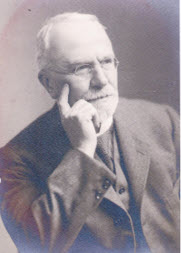
Frederick Chambers
Frederick Chambers was born in 1857 in Whittington, (Derbys.) By the age of fourteen he was apprenticed to his father, James Chambers, a moulder at a local ironworks. James was no ordinary moulder. At that time ironworks across the country were attempting to perfect the manufacture of cast-iron water pipes, which required reliable casting methods and high-quality moulding. The Staveley Coal and Iron Company, near Chesterfield, was making good progress in the development of the process, but suffered a setback in 1878 when James Chambers left and joined Stanton Ironworks Co., a competitor based at Stanton by Dale. Charles Markham, managing director of Staveley, still blamed Staveley’s slow progress years later on his departure. In 1884, when challenged by a shareholder, he stated: “They bribed away our foreman and are now competing with us.”[1] At Stanton, James Chambers was appointed foundry manager and, working with George Crompton, Stanton’s managing director, he continued to develop the process and patented a number of improvements.[2] In 1881 the Chambers family were living at Sandiacre End, Stanton by Dale. James’s occupation was given as foundry manager. Frederick, aged twenty-four, was a foundry foreman, while his brother John, aged twenty-one, was employed as a foundry clerk. In 1882 Frederick married Mary Ann Wright of Whittington. Her father, William Wright, was also a foundry manager.[3] The couple had a daughter, Beatrice Adelaide, in 1883, but Mary died the following year. In 1892 Frederick married, as his second wife, Margaret Murchie, the village schoolmistress. They had three children: James Frederick Murchie Chambers, who became a solicitor; Norman Archibald Chambers, who followed his father into ironworks management and became assistant foundry manager; and John Finlay Chambers, who later became managing director of F. Chambers & Co. Norman was killed in France in 1916. James Chambers died in 1906 and was buried in Stanton by Dale churchyard. Such was the respect in which he was held that the works closed for half a day to allow employees to attend his funeral. Two hundred and fifty workmen were present, in addition to directors and departmental heads, and it was said that every blind in the village was drawn. James had served as foundry manager for twenty-eight years. After his death Frederick succeeded him in that position. Frederick retired as foundry manager in 1921 but remained a director of Stanton Ironworks until 1935.[4] In addition to founding F. Chambers & Co., he also invested heavily in lead mining. In 1918 he invested between £8,000 and £10,000 in the Bradford Vale Co., acquiring 20 per cent of its shares.[5] In February 1920 he purchased the Mill Close mine near Matlock, at a price widely believed to be £140,000.[6] Mill Close was the largest lead mine in the country, producing around one-third of Britain’s output.[7] There was also a report that nickel ore had been found in waste from one of the company’s older workings.[8] In March 1920 Chambers formed Mill Close Mines Ltd, with a capital of £275,000 in £10 shares, to take over the mine and smelter.[9] He sold the undertaking to the new company for £103,660 and 5,634 shares of £10 each.[10] The mine employed 600 men and remained in operation until 1939, when flooding made it uneconomical.[11] It is not known when Frederick disposed of his holding in the company, or at what share price. Frederick Chambers died in 1936, by which time he was living at Holme Lea, Sandiacre.The Foundation of the Pencil Works
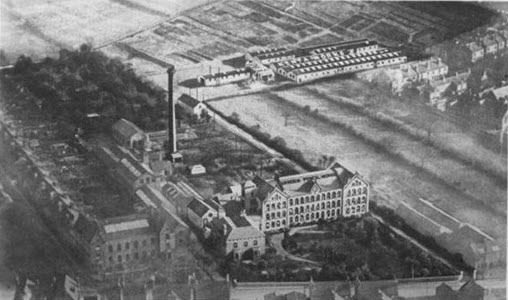
The Foundation of the Pencil Works
By 1913, with tensions in Europe increasing, Frederick Chambers realised that supplies of pencils—many of which were imported from Germany—might be disrupted. He recognised a commercial opportunity and began to explore the establishment of a British pencil-making business.
Pencils require two essential materials: the “lead”, made from a mixture of graphite and clay fired in a kiln, and the timber used to hold it. Advice on timber was close at hand. Robert Frederick Brown lived at Hall Farm, Stanton by Dale, near Chambers’ home. Brown had previously been in partnership with his son Frederick William Brown as timber merchants, and his son continued the trade at Wollaton, where he operated a sawmill.
It is likely that advice on the manufacture of pencil leads came through J. W. Hinchley, an eminent chemical engineer who had developed a substantial consultancy practice. Hinchley had long advocated chemical engineering as a distinct discipline and in 1917 became assistant professor of chemical engineering at Imperial College. In 1925 he was appointed to a full chair. He was also the first honorary secretary of the Institute of Chemical Engineers, formed in 1922. One of his department’s specialities was blast furnace research, and it was probably through Stanton Ironworks that he became acquainted with Chambers.[12] Hinchley remained connected with the company as a director until at least 1930.[13]
Hinchley’s assistant after the First World War was Morton Smith, a chemistry graduate of University College, Reading. Smith later became general manager before leaving in 1927 to form the Anglo Pencil Co.[14]
Frederick’s brother-in-law, James Murchie, was also involved in the early business. Born in 1865,[15] Murchie had been apprenticed in the iron ore industry in North Yorkshire by 1881.[16] In 1891 he went to Singapore, working for J. M. Lyon, and when that firm went into liquidation he joined Howarth Erskine Ltd, an engineering company specialising in the design and construction of iron and steel structures. Murchie became their representative and general manager in Bangkok, where the company employed 600 men, and he later became a director.[17] By 1912 he was trading in London under the name James Murchie & Co. Ltd., engineers and merchants, based in Victoria Street.[18] He died in 1929.
From Mitcham to Stapleford
The business initially operated in Mitcham (Surrey) under the name the CB Syndicate. In 1915 it moved, together with some employees,[19] into Fearfield’s former lace factory in Stapleford. The premises became known as the Garden Pencil Works. The partnership between Chambers and Brown was short-lived and Chambers eventually bought Brown out. It is possible that Brown chose to concentrate on his sawmill, which was supplying timber to the expanding air and motor industries. It is also possible that he had recognised that serious difficulties would arise in obtaining suitable pencil timber.[20] In December 1915 Chambers formed a limited company,[21] F. Chambers & Co. Ltd., with a capital of £30,000 in £1 shares. This was later increased to £100,000, divided into £30,000 of 6 per cent cumulative preference shares and £70,000 ordinary shares.[22] The first directors were Frederick Chambers, J. W. Hinchley, and James Murchie.Pencil Timber and the Search for Alternatives
The timber traditionally used in pencil-making was American pencil cedar. Chambers would have relied upon this wood in the early years of the company. However, by the early twentieth century supplies were becoming scarce. Timber merchants were reported to be dismantling log cabins, barn floors and even old rail fences, exposed to the weather for fifty years, if they were made of pencil cedar.[23] New sources had to be found.[24] A suitable alternative was eventually identified in the juniper tree Juniperus procera, which grew in Kenya. The timber proved an excellent substitute. F. Chambers & Co. were among the first manufacturers to use Kenyan timber, and were doing so by at least 1923. In that year an old boy of Colfe’s Grammar School in Lewisham, then working in Kenya, urged his former headmaster to buy pencils from F. Chambers & Co. because they were made from “Kenya Colony cedar”.[25] The company exhibited at the British Empire Exhibition at Wembley in 1924 and 1925, displaying cedar pencils and a pencil-making machine in the Kenya pavilion.[26] In 1928, when the Prince of Wales visited Kenya, it was reported that he had promised to accept, from the hands of Sir Edward Grigg, the Governor, a case of pencils made by Messrs. F. Chambers & Co. of Stapleford, Nottinghamshire—the only firm engaged in manufacturing pencils using exclusively Empire cedar.[27]
Expansion and Political Interest
The company continued to expand and in 1923 entered the political arena. The Conservative government was keen to introduce tariff reform, and F. Chambers & Co. allowed their name to be used in local propaganda. It was stated that if tariffs were introduced to protect British industry from foreign competition, the company could employ fifty more men and 150 more women.[28]
The Conservatives favoured tariffs, while the Labour Party supported free trade. In the event the election produced a hung Parliament. The Conservatives held the most seats, but the Liberals supported Labour, and Ramsay MacDonald became the first Labour Prime Minister. Tariffs were not introduced.
Problems with Kenyan Cedar and the Stapleford Process
Despite the promise of Kenyan cedar, the timber being exported was not initially processed to the standard required by pencil manufacturers. The quality of American pencil cedar depended not only on the tree itself, but also on careful handling and seasoning after felling. Only the best knot-free heartwood was used, and pencil manufacture wasted around 70 per cent of the bulk and 90 per cent of the volume of each log.[29] A batch of Kenyan pencil wood was exported to the United States in 1924, but American manufacturers refused to place further orders because the wood had warped. In 1930 a batch was sent to Alpco Pencils in England, who reported that they had destroyed most of it because the cedar was unseasoned or non-uniform in thickness.[30] The difficulty was not the inherent quality of the wood, but the poor processing carried out after it reached the sawmills. In 1928 a threefold increase in exports of pencil cedar from Kenya was noted, alongside developments in England involving rapid treatment of pencil slats. This process appeared successful in seasoning the timber and slightly softening it, and it was expected to be of considerable value to the trade.[31] This was almost certainly a reference to work being carried out at Stapleford, but it suggests that the method was still being refined. It may be significant that when Morton Smith left in 1927 to form the Anglo Pencil Co., he relied exclusively on Californian cedar.[32] The degree to which Stapleford’s processing could accommodate variations in timber quality is unknown, but the firm produced pencils of varying grades. An advertisement of September 1935 listed the “Stanto”, aimed at architects, priced at 4d; the “Ino”, aimed at businessmen, at 3d; and the “Sterling”, aimed at students, at 2d.[33]Cosmetic Pencils and the Aynek Syndicate
In 1931 F. Chambers & Co. became the first company to produce cosmetic pencils for Boots.
By August 1932 the company was sufficiently confident in its process to enter into an agreement with Aynek Syndicate Ltd (Kenya spelt backwards). Under the agreement Aynek would supply Kenyan pencil slats, and Chambers would transfer machinery at an agreed price, together with details of its secret processing method. The reasoning behind this arrangement is unclear, though it appears to have been an attempt to create economies of scale by establishing a single supplier of conditioned Kenyan cedar for the British pencil industry. An ex-director of Chambers was a director of Aynek, but little is known about the other members.
The arrangement soon collapsed when Aynek increased its charges. Chambers could produce a gross of pencil slats for 1s. 4d, whereas Aynek sought to charge 1s. 6¼d. There were also allegations—firmly denied—that Aynek was offering lower prices to other firms, particularly Royal Sovereign. Aynek sued Chambers for breach of contract, but the judge refused the application on the grounds that the agreement was in restraint of trade.[34]
In 1934 Royal Sovereign took a controlling interest in Aynek,[35] and in 1936 the syndicate became involved in bankruptcy proceedings. Aynek remains a minor but notable footnote in bankruptcy case law.[36] At the time Royal Sovereign stated: “A great deal of progress has been made in the conditioning of this wood for the manufacture of pencils, and the work of research is still proceeding under the supervision of the chemical department of the company.” This statement indicates the technical importance of the work pioneered at Stapleford.
Welfare and Working Life at the Garden Pencil Works
At the firm’s New Year’s party in January 1935, attended by more than 200 employees and friends, the managing director, John Finlay Chambers, stated that 1934 had been a prosperous year and that prospects for 1935 were brighter.[37] Such comments were not usually made on these occasions, suggesting that the company regarded its position with confidence. Chambers & Co. prided itself on employee welfare. The firm provided free milk, organised staff outings, and held parties. It was also reportedly the first factory to play radio music to employees over loudspeakers; the original BBC letter authorising this, dated 1936, still survives.[38] In 1930 a new rest room and canteen were opened, marked by an inaugural dance at which more than forty guests danced to “electronically produced gramophone music”.[39] Frederick Chambers died in 1936. The value of his estate, £45,174, gives some indication of the wealth accumulated through his industrial and commercial ventures.Decline, Closure and Later Ownership
During the Second World War the company was closed by the government. Although it resumed production afterwards, it never recovered its former position in the market. By 1973 the firm was experiencing difficulties and moved to smaller premises in Sandiacre. The Garden Pencil Works was purchased by Johnson & Barnes.
In 1990 the company went into receivership and was purchased by the German firm Lyra. Lyra was subsequently taken over by the FILA group of Pero, Milan.
Revival and the End of the Stapleford Firm
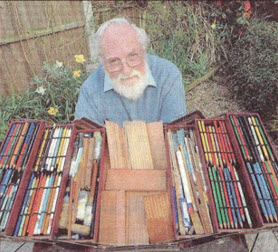
Norman Chambers, a grandson of Frederick, later began making pencils again in his garage, rebuilding machinery from inherited parts and whatever else he could locate. He rented a small unit and established Chambers Pencils Ltd. Norman died in 2014, but the business continued under his son Timothy, operating from Palmer Drive, Stapleford.[40]
The company went into voluntary liquidation in January 2025.[41] Its assets were purchased by a newly formed business, The UK Pencil Company Ltd., established by Gemma Chambers, the fifth generation of the Chambers family to be involved in pencil manufacture in Stapleford.[42]
Footnotes
Click on footnote to return to main text
- S D Chapman, Stanton and Staveley, a business history, p 79
- The Commissioners of Patents Journal 2 Dec 1879 4598 p 1569
- England & Wales Civil Registration Marriage Index 1882 Q2 Chesterfield 7b 1150
- Long Eaton Advertiser 18 March 1836.
- Nottingham Journal 27 Nov 1925
- Nottingham Journal 20 Feb 1920
- Nottingham Journal 20 Feb 1920
- Yorkshire Post and Leeds Intelligencer 28 Feb 1920
- Sheffield Daily Telegraph 18 March 1920
- Derby Daily Telegraph 24 Nov 1925
- Willies, L., Gregory, K., Parker, H. Millclose: the mine that drowned. Scarthin Books and Peak District Mines Historical Society, 1989.
- Hannah Gay History of Imperial College, 1907-2007
- Long Eaton Advertiser 10 Jan 1930
- Long Eaton Advertiser 8 May 1931
- 1871 census
- 1881 census
- Wright, Arnold Twentieth century impression of Siam 1908 p 195
- Opencorporates Co No. 0012716
- Long Eaton Advertiser 9 Oct 1931
- Flight 11 Oct 1917
- Sheffield Daily Telegraph 21 Oct 1915
- Detail from an old share certificate being sold on ebay.
- Donald Culross Peattie A Natural History of American Trees.
- H M Gardiner East African Pencil Cedar, Empire Forestry Journal Vol.5 No.2 p.39
- The Colfeian November 1923 p.137
- Some additional notes on Forestry exhibits at Wembley Empire Forestry Journal Vol 4 No.2 p.265
- Nottingham Evening Post 11 Sept 1928
- Nottingham Evening Post 3 Dec 1923.
- Donald Culross Peattie A Natural History of American Trees.
- Ben Paul Fanstone Ph.D thesis The pursuit of the ‘good forest’ in Kenya, 1890-1963, p. 112
- Colonial Report for Kenya 1928 p.37
- Long Eaton Advertiser 5 June 1931
- Derby Daily Telegraph 18 Sept 1935
- Long Eaton Advertiser 18 May 1934
- Graces Guide Royal Sovereign Pencil Co: 1934 review
- Re Aynek Syndicate Ltd [1936] 1 All ER 406
- Nottingham Journal 15 Jan 1935
- Advertiser and News 1 May 2008 Interview with Norman Chambers, grandson of Frederick Chambers
- Long Eaton Advertiser 28 Nov 1930.
- Website of Chambers Pencils Limited
- Companies House: Company number 08702568
- Companies House: Company number 16148697