Economics
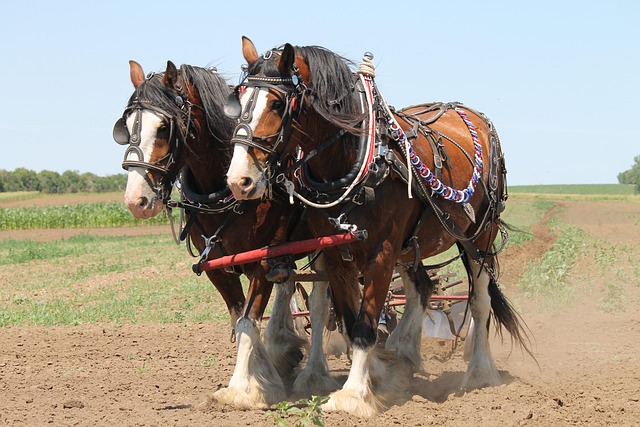
This section examines the ways in which local inhabitants have earned their livelihoods over time. Prior to the early 19th century, the majority of the population was engaged in agriculture. However, by 1801, this pattern had shifted significantly, with more than three times as many individuals employed in trade and manufacturing as in farming. During the 19th century, light industries, such as the lace and textile trades, became established in the parish, while a considerable number of men found employment in heavy industry, notably at the nearby Stanton Iron Works. The expansion of the railway also provided additional opportunities for employment, and new industries emerging in the late 19th and early 20th centuries attracted workers to Stapleford and Sandiacre.
The decline of the manufacturing sector began in the mid-20th century. Many companies were either taken over and subsequently closed or were unable to compete with increasing foreign imports. As of 2020, only Taylors Bros. (Sandiacre) Ltd remains in operation, albeit under a different name. In the present day, a significant proportion of the working population is employed outside the parish in sectors such as local government, the National Health Service, and higher education. Other major employers include Boots in Beeston, as well as Rolls-Royce and Toyota in Derby.
This section covers firms and companies based in both Sandiacre and Stapleford, reflecting the close historical and economic links between the two communities. Employment opportunities were not constrained by the county boundary, and residents of both parishes worked in businesses on either side. This approach also removes the need to establish with precision whether a particular factory was located within the pre-1993 parish boundary of Sandiacre or Stapleford.
Information about most of these companies is hard to obtain. Anyone who feels that they can add to the histories found here is very welcome to get in touch. (See the contact sheet.)