Communications
.
Stapleford’s development has been shaped by its transport and communication links, which have evolved from early roads and waterways to railways, motor transport, and modern telecommunications. Each stage of progress has influenced the town’s economic and social life, connecting it to nearby towns and the wider region.
Waterways and Railways
The Erewash Canal, completed in 1779, was a crucial transport route for the area. Designed primarily for moving coal from the collieries in the north of the Erewash valley to markets in Nottingham, Leicester and beyond, it also carried materials and manufactured goods, which supported the growth of local businesses. The canal remained a key freight route well into the 20th century, though its commercial importance declined with the rise of the railways.
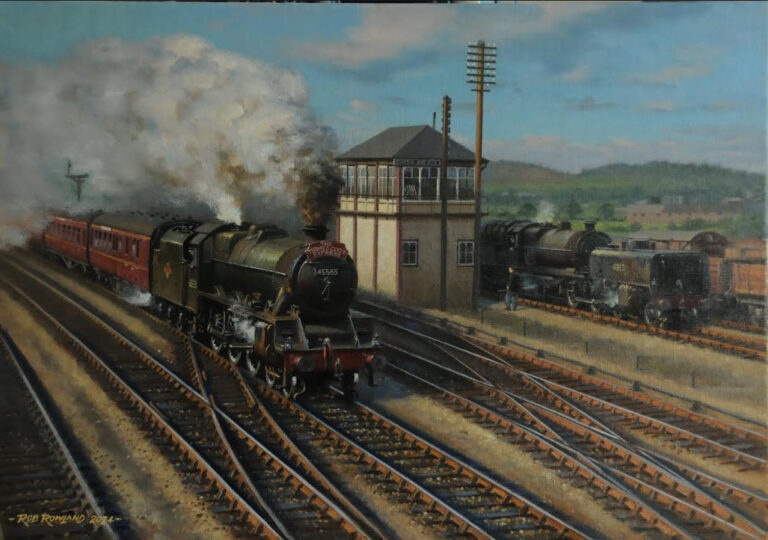
The Midland Railway’s Erewash Valley Line and the subsidiary lines that supported it, opened in the 1840s, providing faster and more efficient transport links. The railway connected Stapleford to Nottingham, Derby, and the wider national network, while also playing a major role in coal transportation. A station at Stapleford and Sandiacre, opened in 1847, served passengers in the south of the parish whilst a station at Stanton Gate served the north of the parish They were both closed in 1967 as part of the Beeching cuts. Despite the loss of the station, the railway line remains in use for freight and passenger services.
Turnpike Roads and Modern Highways
Stapleford’s location along key transport routes has contributed to its development. The Nottingham–Derby Turnpike, established in 1758, provided an improved road link between these two important centres. The turnpike followed a route that later became part of the modern A52, passing through Stapleford. Improved road surfaces and the introduction of toll gates made travel more efficient for stagecoaches, carts, and pedestrians, supporting local trade and commerce.
Another important route was the Ilkeston–Alfreton Turnpike, opened in 1765. This road connected coal-producing areas in Derbyshire to Ilkeston, providing an important link for trade. A spur road from Trowell, following what is now Ilkeston Road, connected this turnpike to Bramcote Odd House.
With the decline of turnpikes in the late 19th century, these roads became public highways. The 20th century saw major improvements, including the rise of motor transport, the expansion of bus services, and the construction of the M1 motorway, which provided Stapleford with a direct connection to the national road network. The A52 now bypasses Stapleford to the south.
Buses: Trent and Barton Services
In addition to the railways, buses became an increasingly important means of transport for Stapleford’s residents. Trent and Barton buses have played a key role in local life, providing transport for workers, shoppers, and students with reliable connections to Nottingham, Derby, and surrounding towns and villages. The introduction of the “Rainbow 5” and “Indigo” services made Stapleford one of the best-served towns in the region.
Post and Telecommunications
The establishment of a local post office in the 19th century played a vital role in connecting Stapleford to the wider world. The introduction of the Penny Post in 1840 improved access to postal services, making communication more efficient and affordable. By the late 19th century, the post office also handled telegraph services, allowing rapid transmission of messages across the country.
The arrival of the telephone network in the early 20th century further transformed communication in Stapleford. Initially available to businesses and wealthier residents, telephone services gradually expanded, becoming common in households by the mid-20th century. Public telephone boxes, once a familiar sight, provided access for those without private lines. Today, mobile phones and the internet have largely replaced earlier forms of communication..