Carr Fastener
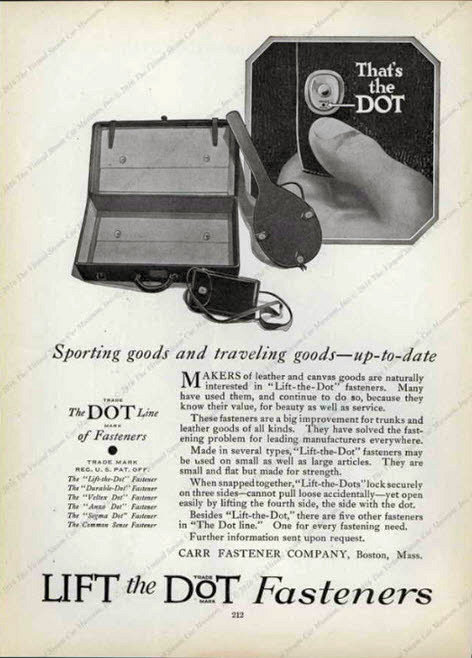
Introduction Carr Fastener was never purely a local company. During the whole of its existence, it was subject, through the parent company, to complex corporate strategies and the economic ups and downs of the American economy. It owes its existence to Frederick Sumner Carr, of Cambridge, Massachusetts, U.S.A.,who invented the fastener, and Thomas William Johnson who first distributed and then made the fasteners here in the UK.
Frederick Sumner Carr
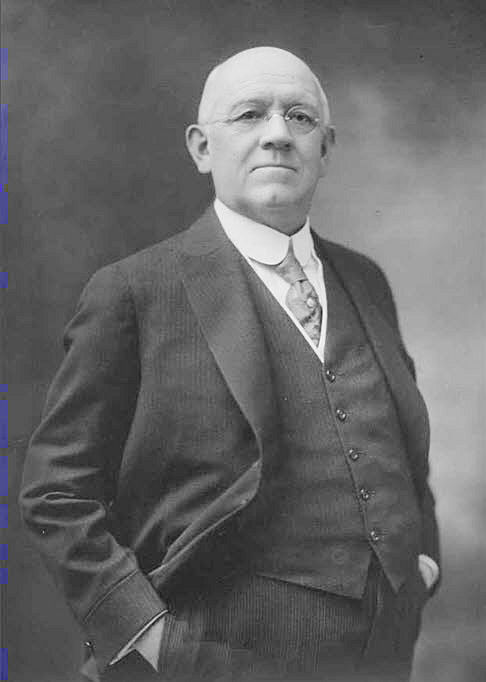
Thomas William Johnson
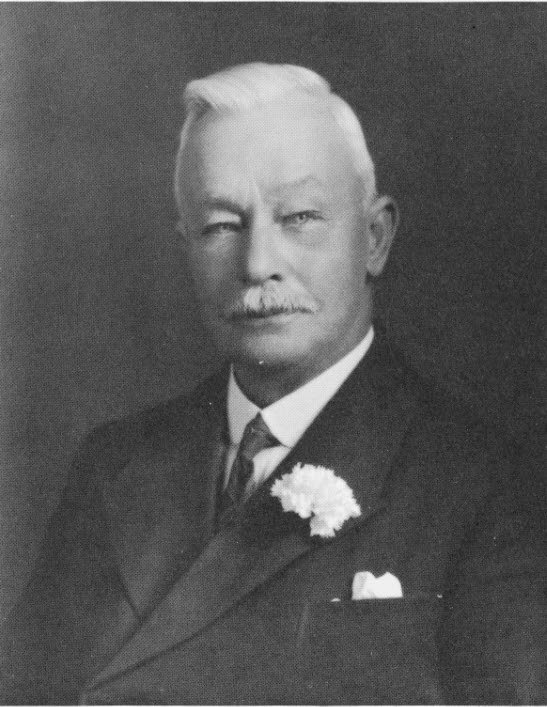
Thomas William Johnson (1859-1940)was born on the 15th May 1859 in Leicester.[4]
His father was Thomas Johnson, who in 1851 was aged 17 and gave ‘carpenter’ as his occupation, like his father. The family were living on Long Street, Wigston Magna and both he and his wife, Catherine, were born in the village.[5] In 1861 he was living on Queen Street, Leicester and gave his occupation as carpenter and joiner and young Thomas William is shown aged one year.[6] In 1871 Thomas again gives his occupation as carpenter etc. and Thomas William is a scholar aged 11.[7] In 1881 Thomas gives his occupation as builder and living on Lutterworth Road , Leicester at Mayfield House. Thomas William was not living with his parents, having recently married.[8]
Thomas William Johnson married Emma Jane Yates in October 1880 and almost immediately sailed for Melbourne, Australia.[9] The first two of his five children, Edith Annie and Gertrude Alice were born in 1883 and 1885 respectively in Melbourne. Archibald Herbert was born in Leicester in March 1887. Emma Kate and May were both born in Melbourne in 1891 and 1894.[10]
In 1901 the family had returned from Australia and were living at Glen Aira 36 Queens Road, Knighton. Johnson gave his occupation as builder and employer. All the children were still living at home.[11] In 1911 the family were living on Leicester Road, Blaby. Thomas gave as his occupation ‘Sales Manager in brass fastenings for motor hoods, etc. “The four daughters Edith Annie, Gertrude Allice, Emma Kate and May are still at home and working as milliners.[12]
Emma Jane, Thomas William’s wife, died on the 16 September 1918 leaving an estate of £1010 2s. 2d.. At the time of probate Johnson was described as a builder. They lived at Woolcahra, Blaby.[13] Johnson remarried in 1919 to Ada Annie Smith, [14]a children’s clothing hand cutter.[15]
Johnson died on the 23 March 1940 when he was then living at The Bungalow, 69 Toton Lane Stapleford. He left estate of £44054 10s. 3d. [16] and left £100 to Edwin Pollard; his household effects and £10 a week to his wife for life; land at Ayleston to his wife and £400 for erecting a bungalow thereon; £100 to the Leicester Charity Organisation Society, and one fifth of the residue to each of his children.
Carr Fastener-the company.
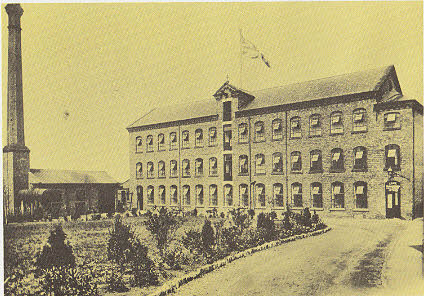
Johnson at first opened an office in Leicester to distribute the American made fasteners and a company, named International Fasteners Ltd., was formed in 1915[17] to exploit the agency. In 1920 the decision was taken to make the fasteners in the UK and an old lace factory on Nottingham Road/Pinfold Lane in Stapleford, formerly owned by John Harrison, was taken over. It was at this point that the company was renamed Carr Fastener and probably became 100% owned by the American company of the same name. Second-hand machinery was sent over from America and it was reported that when the shipment was received Johnson sent a telegram, “Junk received, getting on with the job.” The firm expanded during the 1930’s into radio components and zip fasteners-the company developed a machine that enables the production of zip fasteners of any length for the first time in this country. During the war production concentrated on items widely used in service uniforms and equipment. After the war the company continued to expand. In 1950 the company opened a factory in Worksop for the assembly of radio components and in 1952 the plastics division was inaugurated in old factory premises in Mansfield and then Sutton in Ashfield. In 1960 a factory was opened in Ilkeston. In 1965 there were three divisions. Firstly, the fastener division supplying metal and plastic fasteners. Secondly, a division supplying the radio, television and electronics industry. A third division supplied component parts for the automotive industry. At this time the company employed nearly 2000 people making over 5,000 basic products.
In 1966 Carr Fastener acquired its first computer, an ICT 1901[18], the first company in the area to have such a machine. It was used for production and stock control and accountancy and payroll. In the same year the new administration block was built on the other side of Nottingham Road.[19] In 1968 the company was expanding and bought Whitely Stevens old factory at the junction of Albert Street and Nottingham Road.[20]
The accounts for 1978 show a turnover of £13.14 million, up slightly from the previous year’s figure of £12.98 million. Margins were being squeezed and the profit was £50 million compared with £.80 million.[21]
In May 1981 the company announced that it was moving half of its operations to its modern factory in Worksop. The company’s offices were moved along with some of the assembly operations. and it was estimated that 250 of the 450 work force would be left in Stapleford.[22]
The name of the company was changed to TRW Carr Limited on the 31st December 1981 and to TRW Connectors on the 4th August 1984 reflecting its position as a subsidiary of TRW.[23]
In May 1984 the company announced that it would be closing its operation in Stapleford because of the recession and the high cost of operating the two sites. Considerable expansion was planned at the Worksop site. 97 workers would lose their jobs at Stapleford.[24]
The anticipated recovery does not appear to have taken place and the accounts for 1986 shown a turnover now reduced to £5.95 million, down from the previous year’s figure of £7.20 million. A loss of £194,821 was made in 1986 compared with a loss of £4,628 in the previous year.[25]
On the 24 November 1987 the trading assets and liabilities of TRW Connectors Ltd were acquired by Cinch Connectors Ltd and TRW Connectors ceased to trade on that date.[26] In 1994 a dividend was paid to the parent company of £5,828,152 leaving the company with nil funds. At that time the parent company was TRW UK and the ultimate parent was TRW Inc.[27] The company was struck off on an application made on the 2 June 1997.[28] It was restored to the register by court order on 5 December 2005 and 4 December 2014 on an application by Robert Forrest stating that he is still a creditor of the company.[29] It remained on the register as number 139720 for many years until being dissolved on the 20th May 2025.
Cinch Connectors
Cinch Connectors, as noted above, was the company incorporated in the UK on the 15 October 1987 to acquire the trade and assets of Carr Fastener, at that time called TRW Connectors, which it did on the 24 November 1987 for £1.5 m.[30] The company was part of the Cinch Group and its ultimate owner was the French company Precision Mecanique Labinal SA.[31] one of France’s key suppliers of electrical wiring and equipment for both civil and military aircraft and already part of the Airbus supply chain. Turnover for the first 14 months to 31 December 1988 was £9.23 million with a loss of £.23 million. [32] The company was based in Worksop on Shireoaks Road. In 2007 a new factory was built near to the original site on Shireoaks Road, Worksop.[33] . Cinch Connectors continues to operate in Worksop and is now a subsidiary of Bel Fuse Inc. Its turnover for the year to 31 December 2024 was £17.764 million and its operating profit was £4.146 million.
The original Carr Fastener factory was purchased by Rockford in 2008, the UK’s largest independent wiring, interconnect & system solution provider.[34]
The ownership of Carr Fastener.
Footnotes
Click to return to main text- Patent No. US1038288A and
- Patent No. in the UK 29930
- Carr Fastener 50 years 1915-1965.. Unless stated otherwise the rest of the information can be assumed to have been obtained from this source
- TNA, RG 101/6295F(RNBY) sch.92
- TNA, HO 107/2081, f.49.
- TNA, RG 9/2294, f.81.
- TNA, RG10 3283, f.23.
- GRO Marriage Index, 1880(Q4), Leicester, 7a 531.
- Ruth Simpson
- TNA. RG 13/3003, f.73.
- TNA RG 13/3003, f.73
- TNA RG 14/ 10893, sch 86
- Cal. Grants (1918).
- GRO Marriage Index, 1919 (Q3) Leicester 7a 905
- TNA RG 14/19315 sch.188.
- Cal. Grants(1940)
- Companies House. No. 00139720
- Guardian Journal, 22 Aug. 1966.
- Industrial Nottingham,March 1969, 8.
- Guardian Journal, 3 May 1968.
- Companies House No.139720 Accounts to 31 Dec.1978.
- Stapleford & Sandiacre News, 7 May 1981.
- Companies House No.139720 Overview.
- Stapleford & Sandiacre News, 26 April 1984.
- Companies House No. 139720, Accounts to 31 Dec.1986.
- Companies House No.139720, Accounts to the 31 Dec. 1987.
- Companies House No.139720, Accounts to the 31 Dec. 1994.
- Companies House No.139720, Application to strike off 2 June 1997
- Companies House No.139720, Reinstatement 5 Dec.1905 and 4 Dec.2014.
- Companies House No.2178707, Accounts to 31 Dec. 1988.
- Companies House No.217870, Return of Allotments of shares for cash, 23 Dec. 1987.
- Companies House No.2178707, Accounts to 31 Dec.1988.
- www.building.co.uk search cinch
- www.rockford.co.uk. search cinch
- Boston Globe, 12 Aug.1929.
- Boston Globe, 7 Oct. 1967.TRW also had its roots in the automotive industry and can trace its history back even earlier than Carr Fastener. Electrical resistance welding spread widely throughout the metal working industry in America in the 1890’s and the Cleveland Cap Screw company found a way of using it to manufacture cap screws by welding the head and the shank together. In 1906 Charles E Thompson devised a method of adapting this process for the manufacture of engine valves. The subsequent expansion of the company is well documented.[36] It built the spacecraft Pioneer I in 1958 and figures largely in many different fields of technology.
- Boston Globe, 2 July 2002.
- Los Angeles Times, 4 Mar 2003.
- Los Angeles Times, 6 Mar 2003.
- Philadelphia Inquirer 3 Feb.2004.
- Detroit Free Press, 16 May 2015.
- Illinois Tool Works Inc., Annual Report 2017, 52.
- Dayton News. 20. Nov. 1987.
- Flight Global. 9 May 2000.
- “Safran Timeline”. Safran. Retrieved 2020-02-24
- Bel’s Annual Report, 2009, Acquisitions.